
Route option: Stalag 352 – multifunctional sports complex "Minsk Arena" – Pobediteley Avenue – National Flag Square – Independence Palace – Victory Park - Stele "Minsk- hero City" – Museum of the History of the Great Patriotic War - Memorial Complex to Internationalist Soldiers who died in Afghanistan "Island of Courage and Sorrow" – Embankment of Internationalist Soldiers– Victory Square.
Length: 12.2 km
Duration: 1 h 45 min
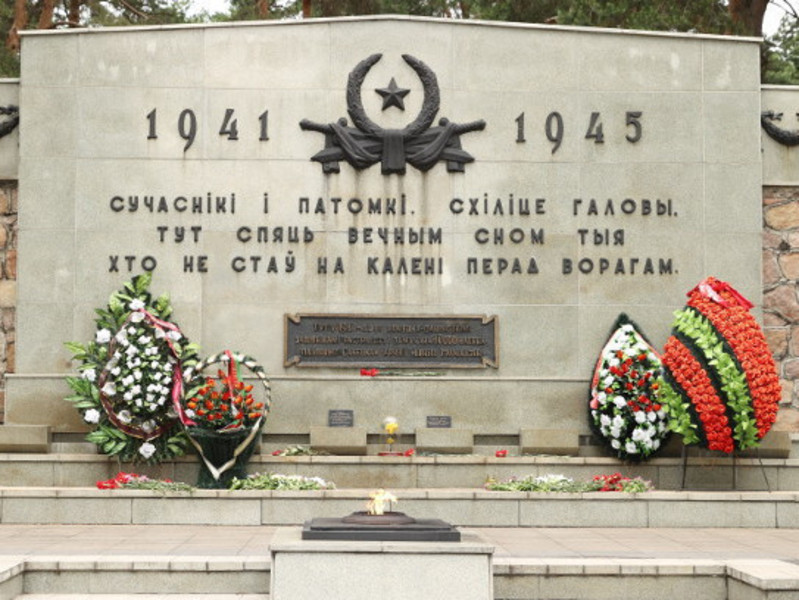
Stalag No. 352 is a prisoner of war camp established by Nazi Germany during the Great Patriotic War in Belarus. According to official data, more than 80,000 Red Army soldiers died there. Some of their burial sites have not yet been examined.
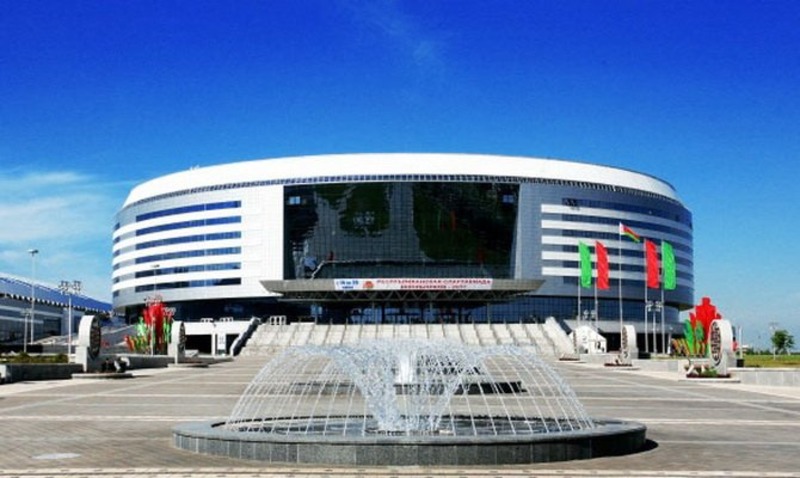
The Minsk Arena is one of the most modern multifunctional facilities in Europe, designed to host international sports, cultural and entertainment events.
The modern Minsk Arena Sports Complex has created the necessary conditions for practicing 28 sports, in particular acrobatics, badminton, boxing, basketball, handball, wrestling, athletic and rhythmic gymnastics, trampolining, figure skating, mini-football, hockey, etc.
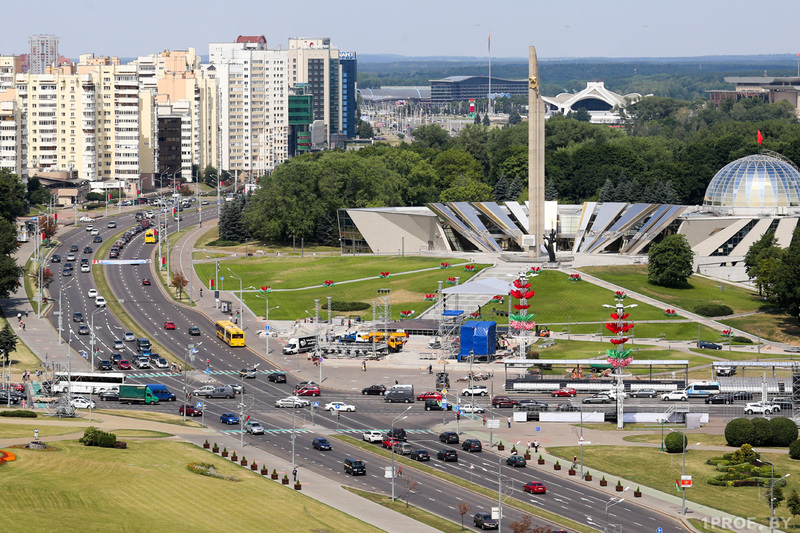
Pobediteley Avenue is one of the main thoroughfares of the city. It connects the historical center with the prestigious northwestern part of the city. Pobediteley Avenue is perpendicular to the main one (Independence) and is an integral part of the second city diameter. Its architectural appearance began to take shape in the 60s of the last century. The peculiarity of the development is the combination of residential and public buildings, shopping and entertainment centers on the left side with a recreation and sports area along the Svisloch River on the right. Until 1980 it was called Park Highway, in 1980-2005 – Masherov Avenue.
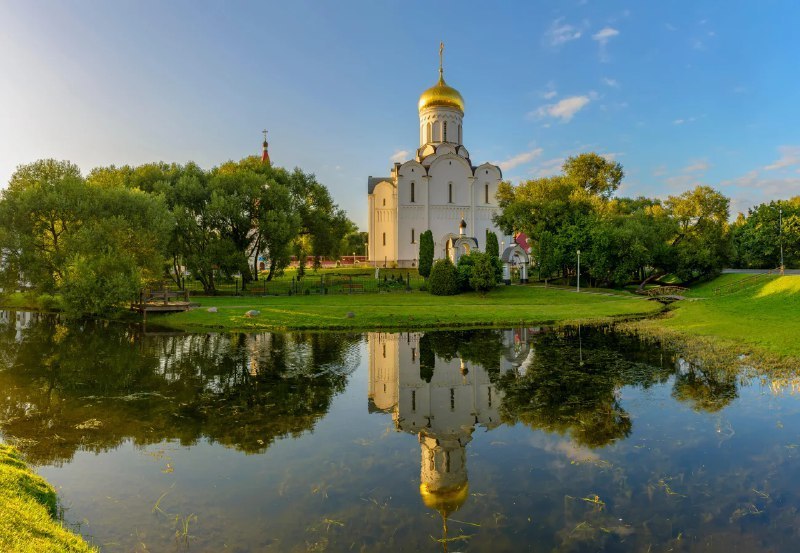
The Orthodox Church of the Intercession of the Most Holy Theotokos is located in a picturesque corner of Minsk. To mark the beginning of construction, in 1992, a 2-meter eight-pointed cross was erected here. The church was consecrated in 1997. The history of this temple goes back to the distant XVII century, when in 1612, in the local area, near the spring, the inhabitants had a miraculous appearance of the icon of the Mother of God. By the name of the nearby Kruptsy estate, the icon began to be called "Krupetskaya" and, as required by church custom, a chapel was erected on this site, where the newly acquired image was placed for veneration. In the middle of the 19th century, a large Holy Protection Cathedral was built on the site of the chapel, which was dismantled in 1936 during the persecution of the church.
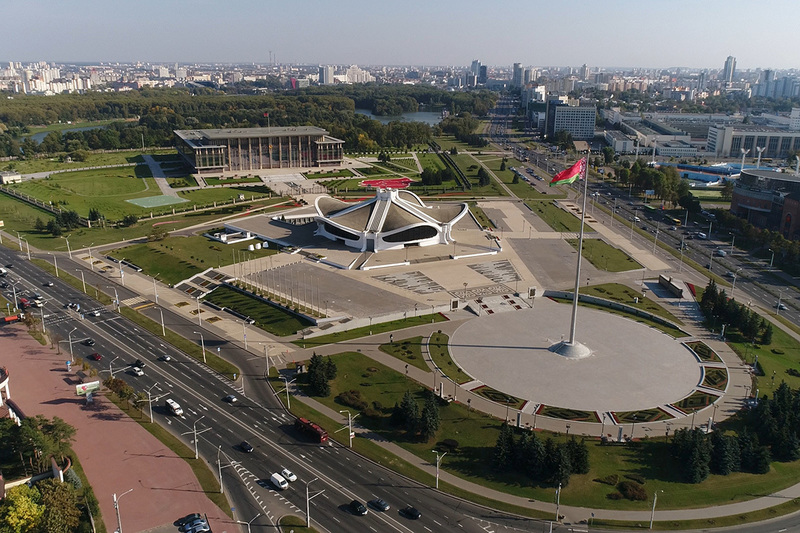
Understanding the importance of the state symbols of our country should become an integral part of the common culture of every Belarusian. This thesis was the basis for the project to create the National Flag Square in Minsk, a place symbolizing the independence of the Republic of Belarus.
The National Flag Square in Minsk is a circle with a radius of 50 meters, in the center of which is a granite pedestal with a flagpole. A bronze State Coat of arms with a diameter of two meters is placed on the pedestal. The flag is hoisted on a 70‑meter stainless steel flagpole stele. There is a 24–meter-wide staircase between the square and the exhibition pavilion, on both sides of which stands with the text of the National Anthem and a map of Belarus are placed. There is a pedestrian path around the site, next to which there are granite steles with the coats of arms of the regions and the city of Minsk.
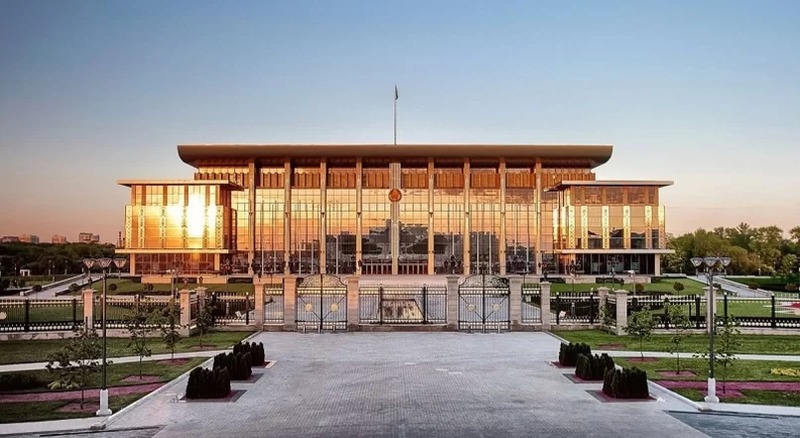
The Palace of Independence is the cultural heritage of the entire Belarusian nation, therefore, by the personal order of the President of the Republic of Belarus Alexander Grigoryevich Lukashenko, its halls are open for guided tours at the appointed time. The Independence Palace demonstrates the versatility of Belarusians' talents.
High-level negotiations, meetings on the most important issues of domestic and foreign policy, meetings of the Head of State with representatives of the Belarusian and world mass media are taking place under the arches of the palace. This complex hosts summits with the participation of leaders from near and far abroad.
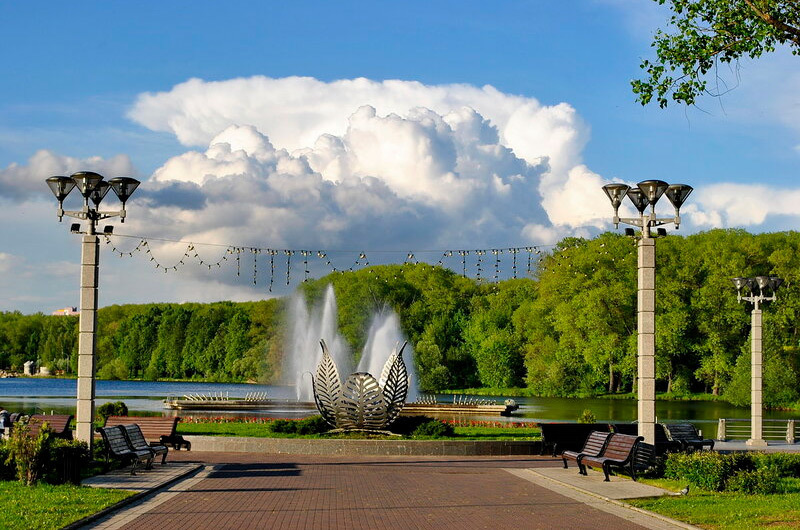
Throughout its existence, the park has undergone multiple reconstructions, but the most global of them was launched in 2005, and in 2011, the renovated park already hosted citizens. The original area allocated for the park in 1941 was about 100 hectares, and today, after all the transformations, the park occupies all 200 hectares. The park has everything for a good time for Minsk residents – sports and concert venues, a health trail around Komsomolsk Lake, a beach, as well as numerous fountains and sculptural compositions that attract the attention of tourists. The most attractive place in the park was Bird Island, because its nature remained as untouched as possible. The only way to get to Bird Island is via a 60-meter bridge.
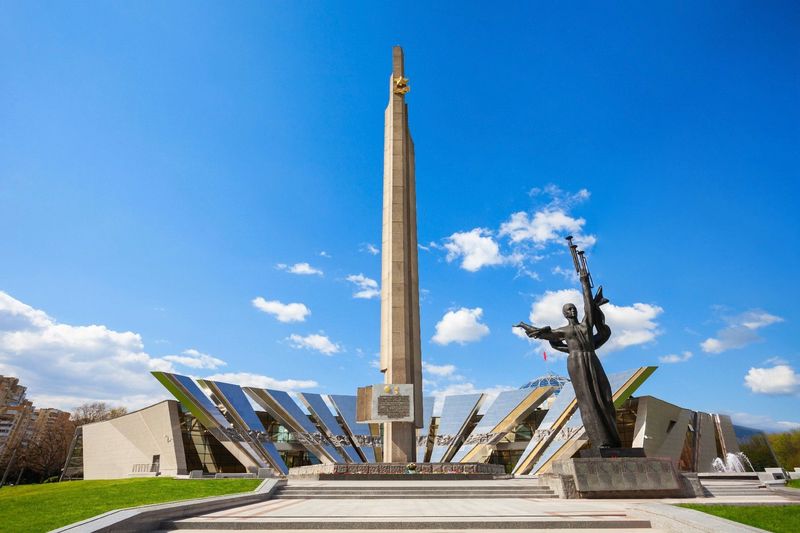
In 1985, in honor of the fortieth anniversary of the end of the Great Patriotic War, an obelisk "Minsk – Hero City" was erected at the very entrance to the park (the stele "Minsk- Hero City", which is the compositional center of the avenue.
The obelisk has a laconic shape: on a man-made mound stands a 46-meter stele in the form of a Victory banner, in the upper part of which is a star of the hero city framed by an oak branch. At the foot of the monument is a plaque with the text of the Decree of the Presidium of the Supreme Soviet of the USSR awarding Minsk the honorary title of "hero city" in 1974. Next to the stele, a majestic figure of a woman rose with a fanfare in her hand held high. It symbolizes the Victory and Glory of the hero city.
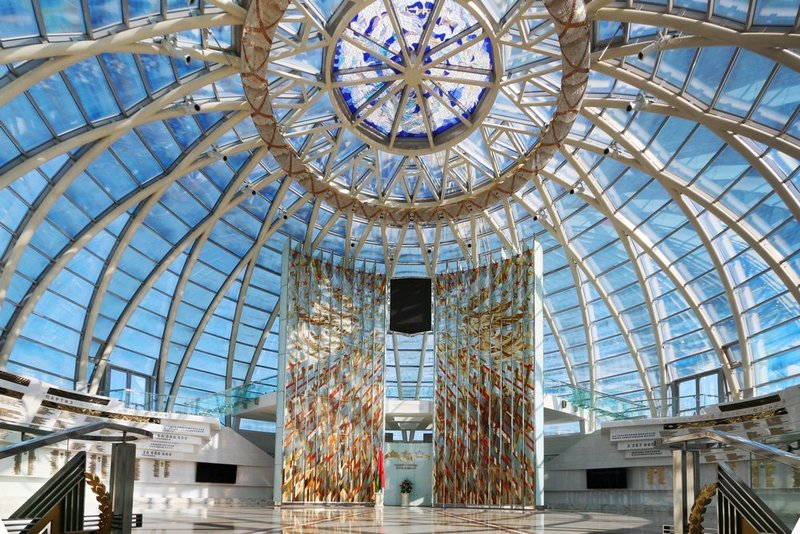
The Belarusian State Museum of the History of the Great Patriotic War is the first in the world dedicated to the bloodiest war of the twentieth century, and the only one in Belarus created during the Nazi occupation. Today it is one of the most significant and largest museums on the planet.
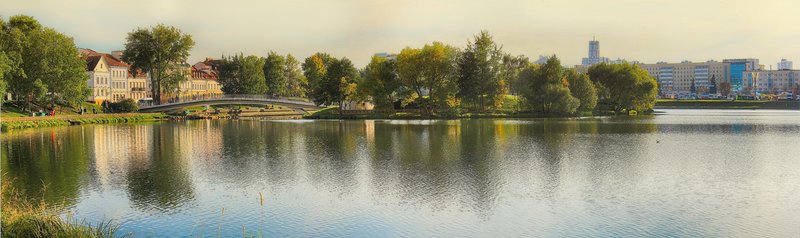
The area from the Island of Tears to Melnikaite Street was named the "Embankment of the Internationalist Warriors."
According to the Ministry of Labor and Social Protection, about 30 thousand citizens of Belarus went through the crucible of the war in Afghanistan. More than 1.5 thousand people were injured, concussed, and maimed in that war, 718 returned home with disabilities (today there are 599 people), 771 died, including 4 women. 12 people are missing.
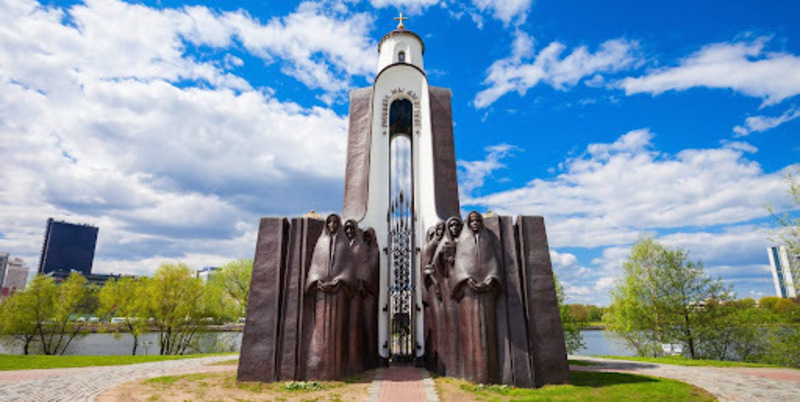
The memorial complex to the internationalist soldiers who died in Afghanistan "Island of Courage and Sorrow", the second name is the Island of Tears, was built in a bend of the Svisloch River, near the Troitsk suburb, this memorial is a tribute to the memory of the Belarusian internationalist soldiers who participated in the war with Afghanistan in 1979-1989 and those who did not return from that war.
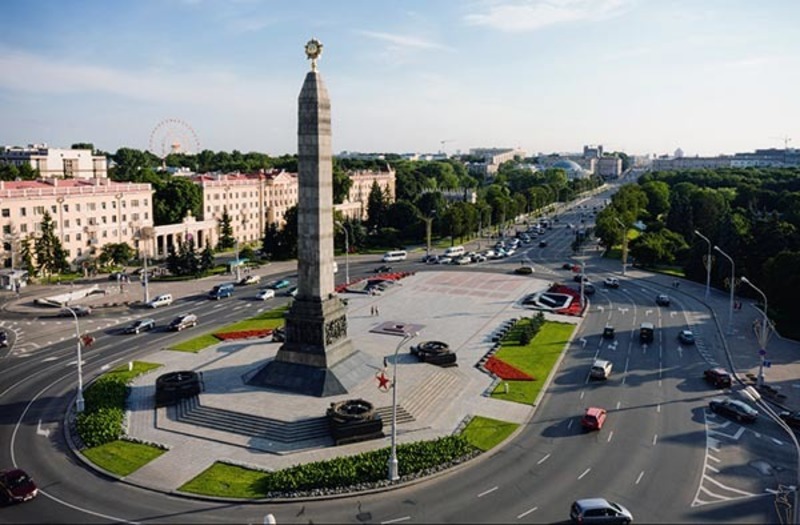
Victory Square is one of the most solemn and majestic squares in Minsk.
The architectural dominant of the entire square, its compositional center is the Victory Monument. It was installed to mark the 10th anniversary of the liberation of Belarus from the Nazi invaders in 1954. After that, the square was renamed Victory Square. Before that, it was officially called Round, and to this day many old-timers call it that way.